§-31 Peptide: A Comprehensive Guide to Its Potential, Benefits, and Research Applications
Wiki Article
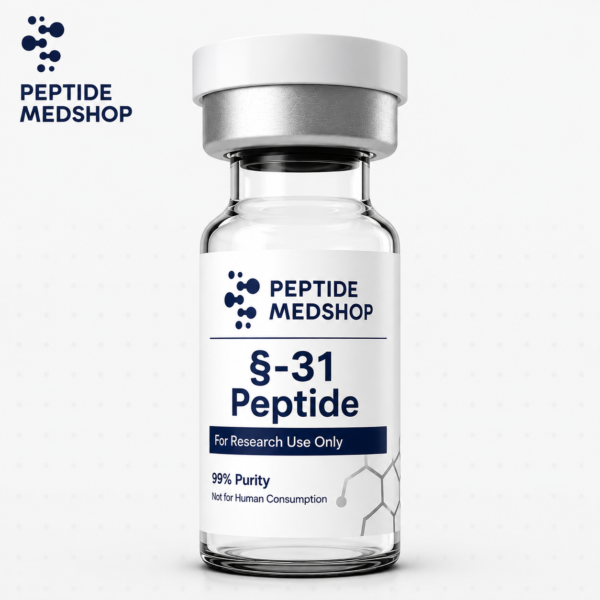
The field of peptide research has expanded rapidly over the past decade, with scientists exploring numerous bioactive compounds for their potential roles in regenerative medicine, anti-aging research, metabolic health, and tissue repair. Among the emerging peptides gaining attention is §-31 Peptide, a novel research compound that has sparked interest due to its unique biochemical properties and potential therapeutic applications.
Although research surrounding §-31 Peptide is still in its early stages, preliminary investigations suggest that it may influence cellular communication, tissue regeneration, and inflammatory responses. As with many experimental peptides, ongoing scientific studies are essential to fully understand its mechanisms, efficacy, and safety profile.
This article explores what §-31 Peptide is, how it works, its potential benefits, current research applications, and future prospects.
What Is §-31 Peptide?
§-31 Peptide is a synthetic peptide developed for scientific and laboratory research. Like many peptides, it consists of a short chain of amino acids designed to interact with specific biological pathways within the body.
Researchers are investigating §-31 Peptide for its ability to regulate cellular functions involved in healing, regeneration, and metabolic balance. Rather than acting as a traditional pharmaceutical drug, peptides typically function as biological signaling molecules that help cells communicate more effectively.
Because of its targeted mechanism of action, §-31 Peptide has become an area of growing interest in regenerative medicine and molecular biology.
How Does §-31 Peptide Work?
The exact mechanism of action of §-31 Peptide remains under investigation. However, current research suggests that it may support various biological processes by interacting with cellular receptors responsible for growth, repair, and immune regulation.
Potential mechanisms include:
- Supporting healthy cell signaling
- Promoting tissue regeneration
- Assisting in cellular repair processes
- Influencing inflammatory pathways
- Supporting mitochondrial function and cellular energy production
These mechanisms make §-31 Peptide an attractive candidate for further biomedical research.
Potential Benefits of §-31 Peptide
While clinical evidence is still developing, researchers have identified several areas where §-31 Peptide may demonstrate promise.
1. Tissue Repair and Regeneration
One of the most promising areas of research involves tissue regeneration. Scientists are evaluating whether §-31 Peptide can enhance the body's natural healing response following injury by supporting cellular repair mechanisms.
Potential applications include:
- Muscle recovery
- Connective tissue repair
- Skin regeneration
- Recovery after physical stress
2. Anti-Inflammatory Properties
Chronic inflammation contributes to numerous health conditions, including joint disorders, cardiovascular disease, and metabolic dysfunction.
Preliminary laboratory studies suggest that §-31 Peptide may help regulate inflammatory signaling pathways, potentially reducing excessive inflammatory responses while preserving normal immune function.
Further research is necessary to determine its effectiveness in clinical settings.
3. Cellular Health
Healthy cellular function is essential for maintaining overall wellness.
Researchers are exploring whether §-31 Peptide may:
- Improve cellular communication
- Protect cells from oxidative stress
- Support normal protein synthesis
- Enhance cellular resilience
These properties could make it valuable in studies focused on healthy aging.
4. Metabolic Support
Another area of scientific interest involves metabolism.
Some early investigations indicate that §-31 Peptide may influence metabolic signaling pathways associated with:
- Energy utilization
- Glucose metabolism
- Fat metabolism
- Cellular energy efficiency
Although these findings remain preliminary, they represent an exciting direction for future research.
5. Recovery Optimization
Athletic performance researchers have shown increasing interest in peptides that may support recovery following exercise.
Potential recovery-related benefits under investigation include:
- Reduced recovery time
- Enhanced muscle adaptation
- Improved protein turnover
- Reduced exercise-induced inflammation
Importantly, these potential effects have not yet been confirmed through large-scale human clinical trials.
Current Research Applications
Scientists are currently evaluating §-31 Peptide across several research disciplines.
Regenerative Medicine
Researchers are studying its potential role in promoting tissue healing and accelerating regenerative processes.
Cellular Biology
Laboratories are examining how §-31 Peptide affects intracellular communication and gene expression involved in cellular repair.
Aging Research
Since aging is associated with declining cellular function, researchers are investigating whether §-31 Peptide can support healthy biological aging through improved cellular maintenance.
Sports Science
Experimental studies continue to explore its effects on muscle recovery, endurance adaptation, and recovery biomarkers.
Safety Considerations
As an experimental research peptide, §-31 Peptide has not yet undergone the extensive clinical testing required for approved therapeutic use.
Researchers continue evaluating:
- Optimal dosing
- Long-term safety
- Biological stability
- Pharmacokinetics
- Potential interactions with other compounds
Until comprehensive human clinical studies are completed, its safety profile remains under investigation.
Advantages of Peptide Research
Peptides have become increasingly attractive in biomedical research because of several unique characteristics.
These include:
- High biological specificity
- Targeted cellular interactions
- Potentially fewer off-target effects
- Natural compatibility with biological systems
- Broad therapeutic research potential
These advantages have contributed to the growing popularity of peptide-based research across pharmaceutical and biotechnology industries.
Future Directions
Interest in §-31 Peptide continues to grow as peptide science advances.
Future research may explore:
- Personalized medicine applications
- Combination peptide therapies
- Regenerative treatment strategies
- Age-related cellular health
- Chronic inflammatory conditions
- Advanced tissue engineering
As scientific understanding expands, researchers hope to better define its biological functions and potential clinical value.
Important Research Disclaimer
It is important to recognize that §-31 Peptide remains an experimental research compound. Information currently available is primarily based on laboratory investigations and preclinical studies.
The compound has not been approved for the diagnosis, treatment, cure, or prevention of disease unless specifically authorized by the appropriate regulatory agencies in a given jurisdiction.
Individuals should not self-administer experimental peptides without qualified medical supervision or outside approved research settings.
Conclusion
§-31 Peptide represents an emerging area of interest in modern peptide research. Its potential roles in tissue regeneration, cellular repair, inflammation modulation, metabolic support, and healthy aging have attracted attention from scientists across multiple disciplines. While early findings are promising, much remains to be learned about its mechanisms, efficacy, and long-term safety.
As research progresses, §-31 Peptide may contribute valuable insights into regenerative medicine and molecular biology. Until more robust clinical evidence becomes available, it should be regarded as an investigational compound intended for scientific research rather than established medical treatment. Continued peer-reviewed studies and well-designed clinical trials will be essential to determine its future place in biomedical science.